
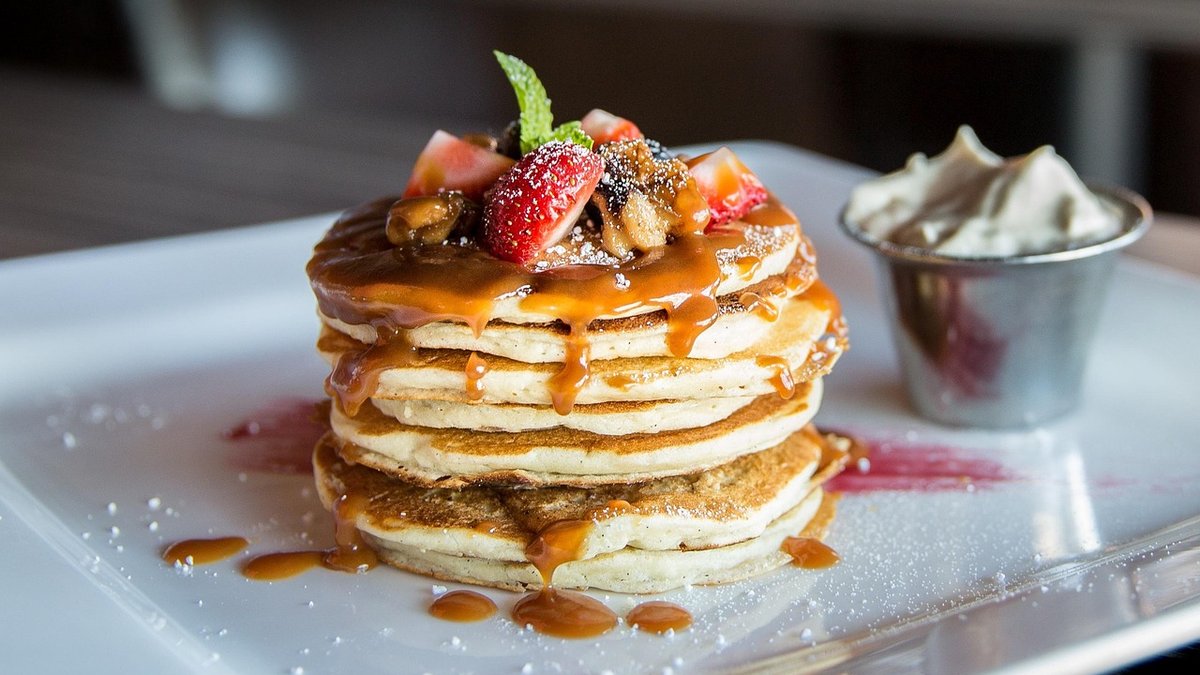
Streaky bacon straight from the frying pan is a fine thing, but it has a habit of demanding your full attention at exactly the moment you are trying to poach eggs, warm a pan of beans and butter a stack of toast. The oven changes all of that. Lay the rashers on a tray, slide them in, and you have both hands free. The fat renders slowly, the edges crisp evenly, and the only real decision left is when to brush on the maple syrup.
That final glaze is where the clever bit happens. Maple brings a soft, almost toffee sweetness that clings to the salty, cured surface of the bacon. Crushed black pepper cuts through both, adding a gentle heat that lingers at the back of the throat. It is the sort of thing that disappears from the plate before anything else — sweet, savoury and gone.
The cut matters more than most people expect. You want streaky bacon, not back bacon. Streaky comes from the belly, with ribbons of fat running through the lean, and that fat is what bakes into crispness and carries the glaze. Back bacon will work at a push, but it tends to dry out and can turn leathery beneath the sweetness.
Look for dry-cured bacon, sold loose by a butcher or in trays without a puddle of liquid around it. Dry curing means the pork is rubbed with salt rather than pumped with brine, so it roasts rather than steams. Ask for rashers cut about 3–4mm thick; any thinner and they will catch before the fat renders, any thicker and the centre stays flabby.
Heat the oven to 200°C (180°C fan, gas 6). Line a large baking tray with foil, then lay a sheet of baking parchment on top. The foil catches the fat and saves you scrubbing; the parchment stops the maple from welding itself to the metal.
Arrange the rashers in a single layer with a little space between each one. Crowding the tray is the single most common reason for pale, flabby bacon — the steam cannot escape. If you are cooking for a crowd, use two trays rather than piling them up.
Bake for 12 minutes. Pull the tray out, tilt it slightly and spoon off any excess fat if there is a lot, then brush each rasher generously with maple syrup. Return to the oven for another 6–8 minutes, until the edges are dark and lacquered. If you want a deeper gloss, switch on the grill for the final 2 minutes, but stay at the oven door — maple goes from caramel to carbon in seconds.
Lift the rashers onto kitchen paper and let them sit for a minute or two. They crisp as they cool, and the pepper goes on now, while the glaze is still tacky enough to hold it.
Use real maple syrup, not maple-flavoured syrup. The good stuff is graded; for cooking, an amber or dark syrup gives more depth than the palest grade, which is lovely poured over pancakes but a little shy against smoked bacon. You will need roughly 2 tablespoons for every 6 rashers.
For the pepper, crack whole black peppercorns coarsely in a pestle and mortar, or use the coarsest setting on your grinder. You are after shards, not dust. A scant half teaspoon per tray is plenty, scattered from a height so it lands evenly. Grind it fresh — pre-ground pepper tastes of little but heat, and the aroma is half the pleasure here.
If you fancy a little warmth beyond the pepper, a pinch of smoked paprika or a few chilli flakes brushed on with the syrup works beautifully and does not fight the maple.
These rashers are a natural partner for anything soft and slightly plain that needs a salty-sweet lift.
Keep everything else on the table gentle: cold butter, good coffee, a jug of orange juice. The bacon is already doing the loud work.
You can bake the rashers to about 80 per cent done earlier in the day, then finish them at 200°C for 5–6 minutes just before serving. Keep them in a single layer, loosely covered, and never stack them warm — trapped steam undoes all that crispness.
If your bacon turns out chewy rather than crisp, the culprit is nearly always the oven temperature or crowding. Give the rashers more room and a few extra minutes. If the glaze catches and darkens too quickly, your oven is running hot; drop it by 10 degrees and finish under the grill instead. And if the tray has caught a thick layer of set syrup, soak it in hot water with a splash of washing-up liquid before you even think about scrubbing.
Leftovers keep for two days in the fridge and reheat well in a dry frying pan over a low heat, or in a hot oven for a few minutes. Cold, straight from the fridge, they are also quietly excellent in a sandwich with sharp Cheddar and a smear of mustard. Nothing goes to waste.

Hi, my name is Anthony kuber. I am artist and fashion designer.
I love to travel and writing blogging.
Your email address will not be published. Required fields are marked *
Software Developer & Writer
Hey, I'm Diva, a developer and writer blending code and creativity. I'm driven by a deep curiosity and a relentless pursuit of excellence. Join me as I craft digital solutions and captivating stories.


