
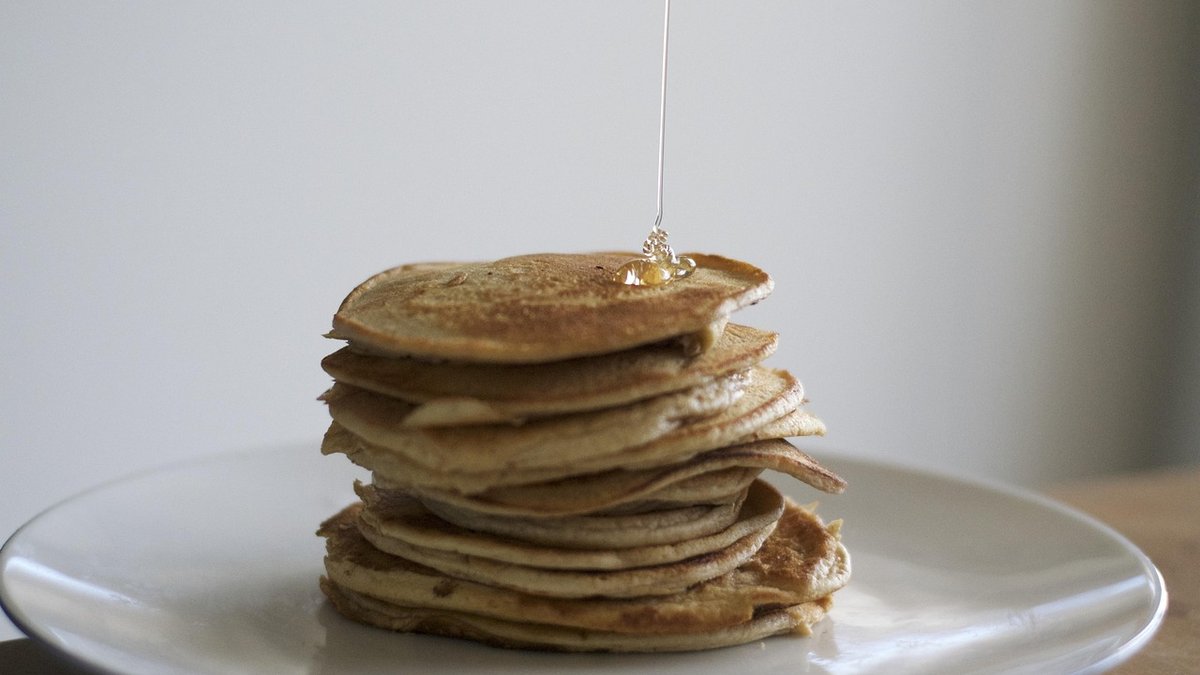
There is something deeply civilised about a slow Saturday breakfast, and pancakes are the dish most likely to make a grey British morning feel like an occasion. Maple syrup suits them perfectly: it is thinner than golden syrup, less cloying than jam, and it carries a faint woodland bitterness that keeps sweet things from tipping into sickliness.
The trick is not to drown the pancakes but to treat the syrup as a seasoning, not just a pour. A spoonful stirred into the batter deepens the flavour; the rest is warmed and drizzled at the table. What follows is a straightforward, reliable method for a stack that is fluffy in the middle and lacy at the edges, plus a few seasonal ideas for the rest of the year.
For four generous portions, you will need:
Whisk the dry ingredients together in a large bowl. In a jug, combine the buttermilk, egg, maple syrup and melted butter. Pour the wet into the dry and fold gently with a spatula until barely combined — a few streaks of flour are exactly what you want. Overmixing develops gluten and gives you rubbery discs rather than fluffy pancakes. Leave the batter to rest for ten minutes while you set the table and make coffee; the bicarbonate gets to work and the texture improves noticeably.
Note that maple syrup in the batter encourages browning, so keep your pan at a moderate heat rather than a fierce one, or the outside will catch before the middle sets.
Warm a heavy frying pan or flat griddle over medium heat for a good three minutes — consistency matters far more than a specific number on the dial. Brush with a little butter. You can test the temperature by dropping in a teaspoon of batter: it should sizzle quietly and set at the edges within a minute.
Ladle in about 60ml of batter per pancake, spreading it gently. Cook for two to three minutes, until bubbles rise, break and stay open across the surface, and the underside is a deep golden brown. Flip once, with confidence, and give it another minute or so. Resist pressing down with the spatula; you will squeeze out the air you spent time creating.
Keep finished pancakes on a plate in a low oven — around 100°C fan — loosely covered with a clean tea towel. They will stay warm and soft for twenty minutes, which is enough time to cook the rest and get everyone seated.
Never serve maple syrup straight from a cold cupboard. Pour what you need into a small pan or jug, warm it gently until it loosens and smells fragrant, and add a knob of butter to melt through it. The result is glossier, richer and far better at soaking into the crumb.
Finish with flaky salt. Just a few grains, scattered over the syrup, makes everything taste more like itself.
The base recipe takes kindly to whatever the season offers.
A little lemon zest or a pinch of cinnamon in the batter also works well, though keep the additions light so the maple stays the point.
The batter can be mixed the night before and kept covered in the fridge; add a splash of milk to loosen it in the morning. Cooked pancakes freeze excellently — layer them with baking parchment, bag them up and they will keep for two months.
To reheat, toast them straight from frozen in a low oven or, better still, in a dry frying pan for a minute each side, which restores the crisp edge. Then warm the syrup, add the butter and nuts, and sit down properly. Weekend breakfasts deserve that much.

Hi, my name is Anthony kuber. I am artist and fashion designer.
I love to travel and writing blogging.
Your email address will not be published. Required fields are marked *
Software Developer & Writer
Hey, I'm Diva, a developer and writer blending code and creativity. I'm driven by a deep curiosity and a relentless pursuit of excellence. Join me as I craft digital solutions and captivating stories.


